



Loud snoring, broken sleep and persistent daytime tiredness can sometimes be signs of sleep apnoea—a condition in which breathing repeatedly reduces or stops during sleep.
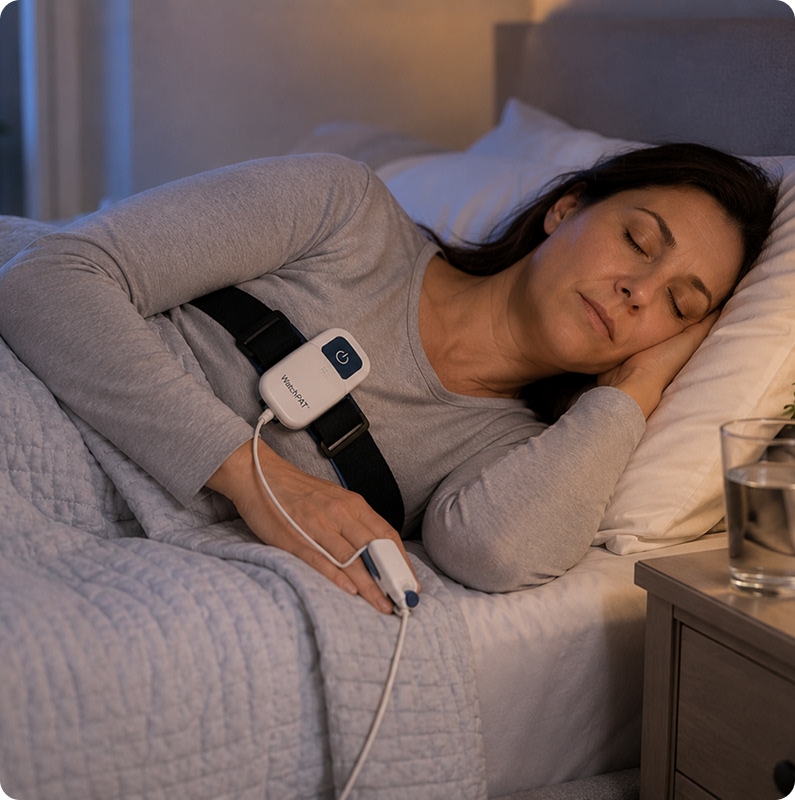
At The Well Clinic, we combine a detailed medical assessment with WatchPAT®️ home sleep apnoea testing. Instead of spending the night in an unfamiliar clinical setting, eligible patients can complete the study in their own bedroom, where their sleep is more representative of their normal routine.
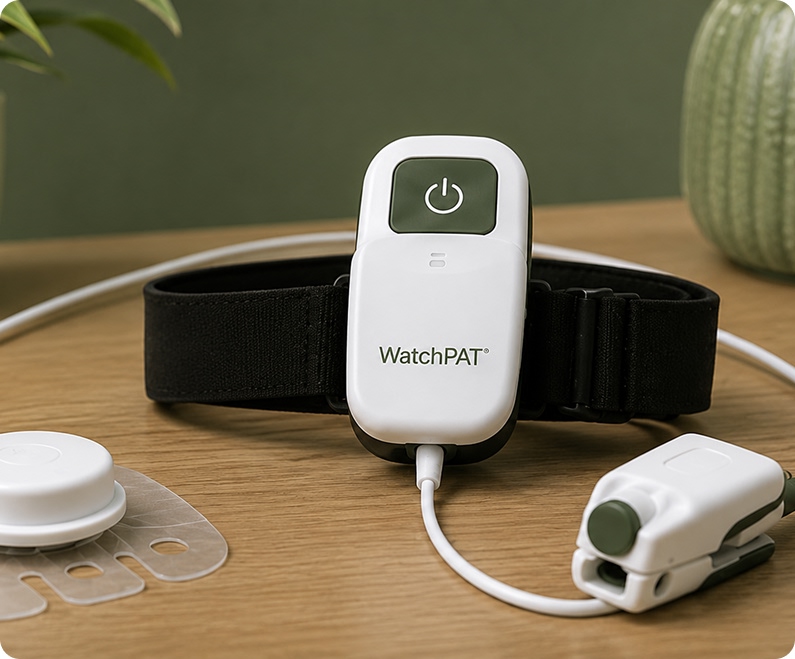
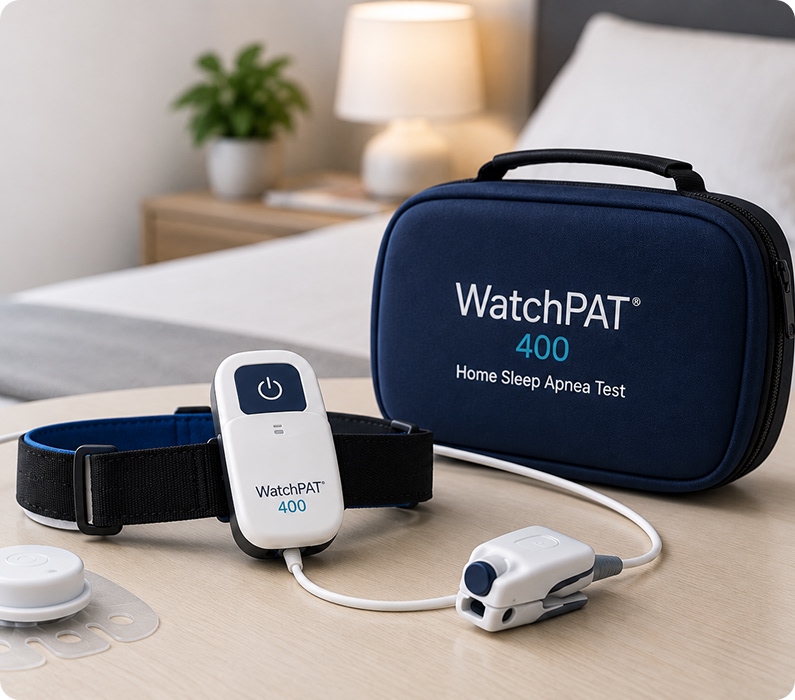
WatchPAT®️ is a portable Home Sleep Apnoea Test that uses peripheral arterial tonometry technology to support the diagnosis of sleep apnoea. Official ZOLL information describes the system as simple to use, accurate and reliable. (Zoll)


WatchPAT has been designed to make home sleep testing more comfortable and straightforward. The device allows suitable patients to complete an overnight sleep study in their own bed without the more complex equipment associated with some traditional sleep investigations.
Complete the study in familiar surroundings that better reflect your usual sleeping environment and habits.
The WatchPAT system is designed for patient use at home, with straightforward sensor placement and no need to sleep in a clinic.
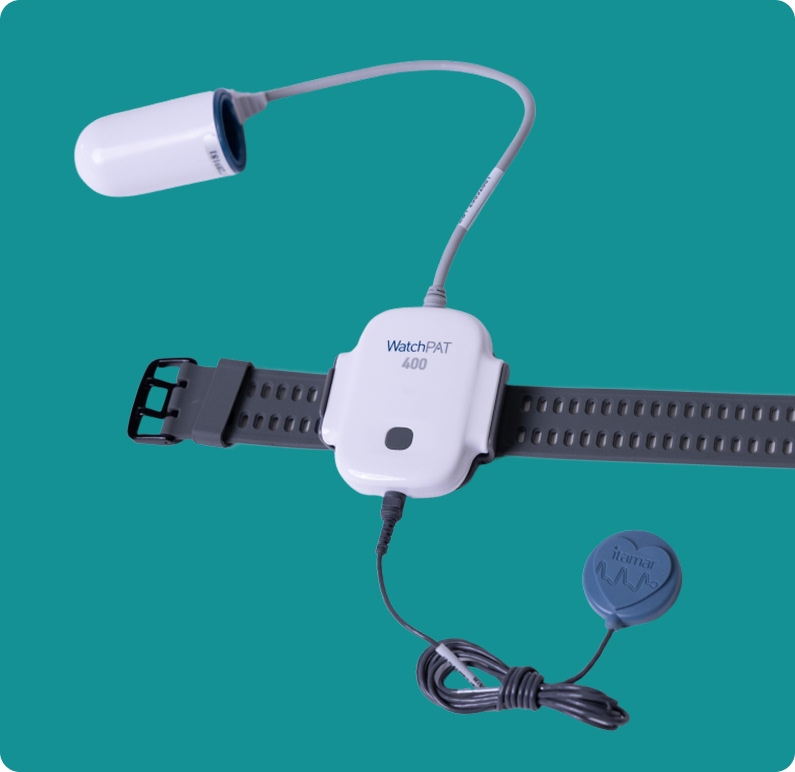
Depending on the model and configuration, WatchPAT technology can collect information relating to peripheral arterial tone, heart rate, oxygen levels, sleep and wake patterns, body position, snoring and chest movement.
The technology generates information to support clinical assessment. Your results must be interpreted in the context of your symptoms, medical history and wider health.
Sleep apnoea is not simply a snoring problem. Repeated disruption to sleep and breathing can affect daytime alertness, quality of life and wider health.
ZOLL notes that sleep apnoea commonly occurs alongside cardiovascular conditions, including atrial fibrillation and heart failure.
Technology is most useful when it is combined with appropriate clinical assessment.

A discussion of your symptoms, sleep pattern, medical history, medications and relevant risk factors.
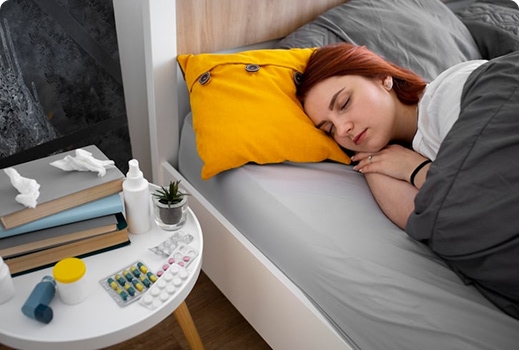
You may be asked about snoring, daytime sleepiness, witnessed breathing pauses and the quality of your sleep.

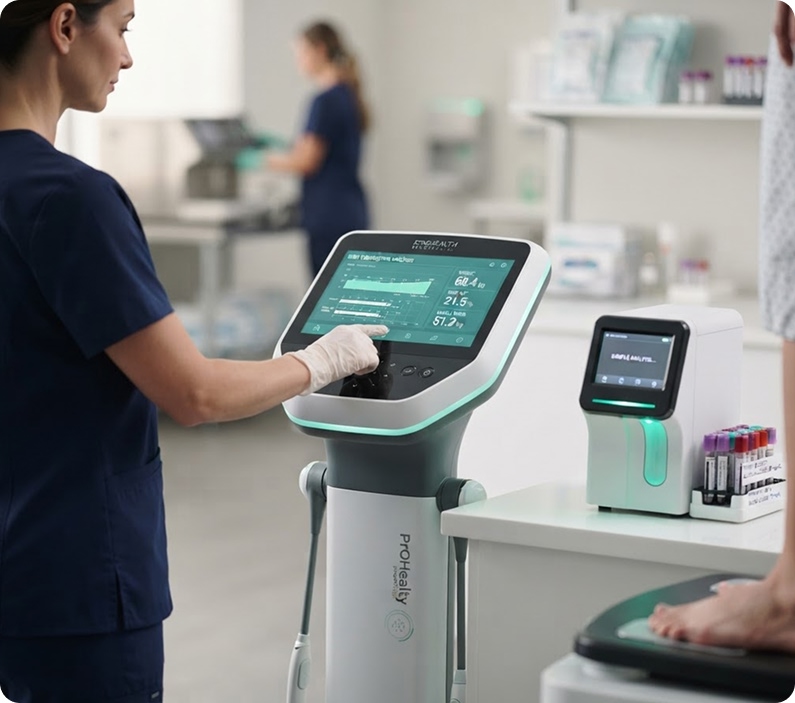
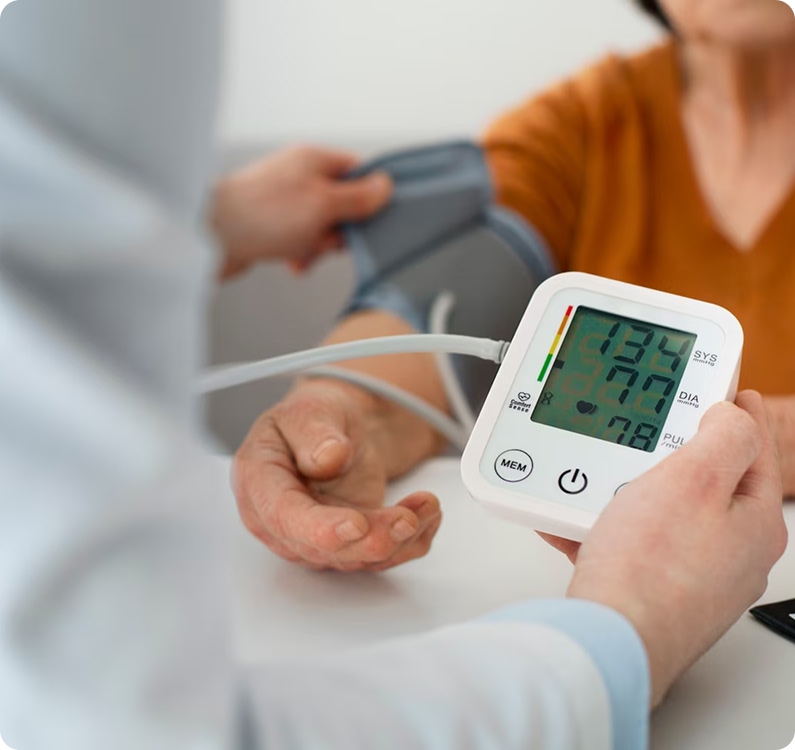
Depending on your circumstances, this may include blood pressure, weight, body composition, cardiovascular risk and metabolic health.
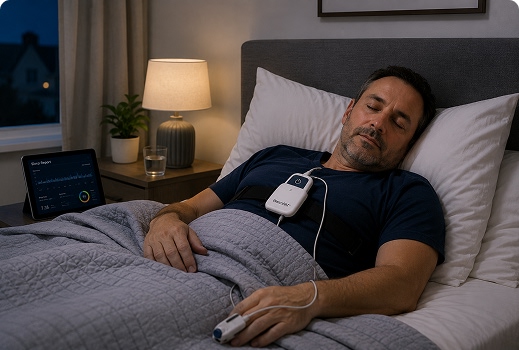
If the test is suitable for you, the clinic will explain how to use the device before you complete the study at home.
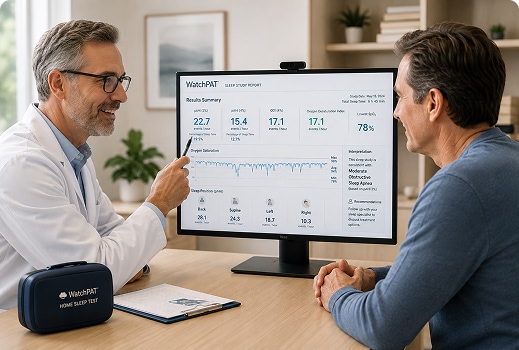
The study findings are interpreted alongside your clinical information and explained clearly.

Depending on the results, you may receive lifestyle advice, weight-management support, treatment guidance or referral for specialist sleep care.
Sleep apnoea is a sleep-related breathing disorder in which breathing repeatedly stops, reduces or becomes disrupted during sleep.
The most common form is obstructive sleep apnoea, which occurs when the upper airway repeatedly narrows or closes. These events can interrupt normal sleep and may cause oxygen levels to fall. Because the person is asleep, they may not realise that these breathing events are happening. A partner may be the first to notice loud snoring, pauses in breathing, choking or gasping.
Consider booking an assessment if you experience:


Sleep can be difficult to assess when you are lying in an unfamiliar environment surrounded by complicated equipment. Home testing allows you to follow your normal bedtime routine and sleep in your own bed.
Provides information beyond body weight and BMI, including fat mass, muscle mass and visceral fat. Helps establish a baseline and allows progress to be measured more meaningfully over time.
Records blood pressure throughout the day and night, providing a more complete picture than a single clinic reading. Particularly valuable where white-coat hypertension is suspected.
Assesses diabetes risk, cholesterol, liver health, thyroid function and other factors relevant to weight management, forming a clear and accurate foundation for your personalised plan.
Sleep apnoea can be closely connected with weight, cardiovascular health and metabolic risk. For some patients, managing the condition involves more than one intervention.


A Simple Patient Journey
Arrange an initial sleep apnoea consultation with The Well Clinic.
Our team provides the WatchPAT system and explains how to set it up correctly.
Follow your normal evening routine, attach the sensors and sleep in your own bed.
The process will depend on the WatchPAT model and clinic workflow.
Your findings are reviewed and discussed with you, together with the recommended next steps.
Designed for home use, with a limited number of contact points and an intuitive overnight set-up.
Uses proprietary PAT®️ technology and additional physiological signals to support sleep apnoea diagnosis.
Designed to collect clinically useful overnight information in the comfort of the patient’s home.
WatchPAT®️ is a portable Home Sleep Apnoea Test that uses peripheral arterial tonometry and other physiological signals to support the diagnosis of sleep apnoea. It is designed to be used overnight in the patient’s own home.
It has been designed with patient use in mind. Official instructions describe a simple set-up involving a chest sensor, wrist-worn unit and finger probe, depending on the model supplied.
No. The key benefit of WatchPAT®️ is that eligible patients complete the test in their own bedroom.
The study provides information used to support diagnosis. Your result must be reviewed in conjunction with your symptoms and medical history.
Certain WatchPAT®️ configurations support assessment of obstructive and central sleep apnoea. The exact capability depends on the model and sensors used.
Depending on the model, it may collect information relating to PAT signal, heart rate, oxygen levels, sleep and wake activity, body position, snoring and chest movement.
WatchPAT®️ is non-invasive and designed to minimise disruption while you sleep. Individual experiences may vary.
Yes. The final collection, delivery and return arrangements should be confirmed with the clinic.
Your results and next steps will be explained. Depending on the type and severity of the findings, further specialist assessment, treatment or lifestyle support may be recommended.
The proposed service allows patients to contact The Well Clinic directly. Final referral and eligibility requirements should be confirmed before publication.
The Well Clinic is proudly based in Waterford and welcomes patients from across Waterford, Kilkenny, Wexford, Carlow, Tipperary and the wider South East of Ireland. We also regularly care for patients travelling from Dublin and other parts of Ireland.